
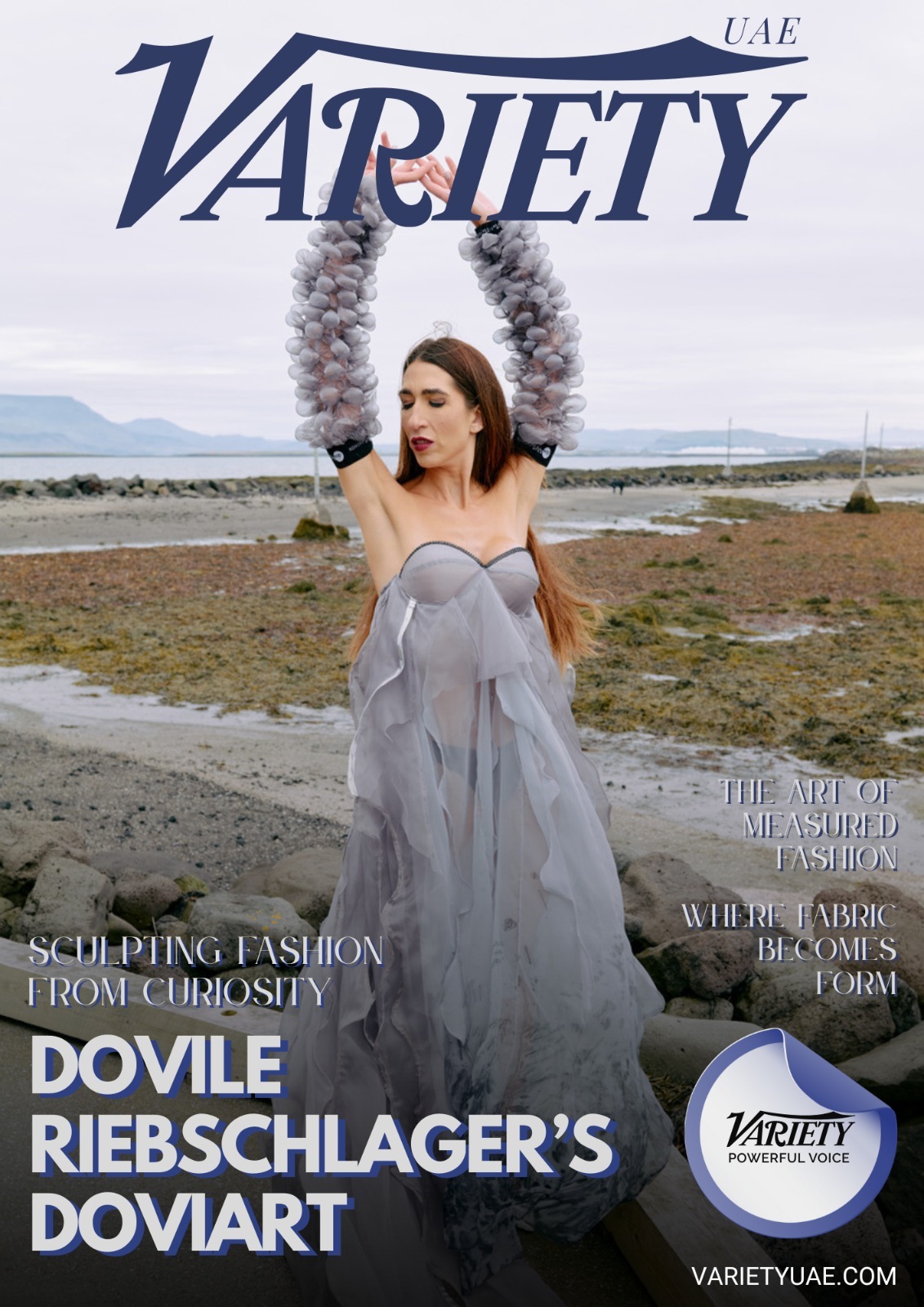
How Dovile Riebschlager Built a Fashion Language Without a Map
Dovile Riebschlager never grew up dreaming of fashion weeks or front rows. There were no runways where she lived, no industry to mirror, no mentors to follow. What she had instead was an old sewing machine, a pile of magazines, and a question she asked at thirteen that would quietly change everything: How does this work?
That curiosity — unpolished, persistent, and deeply instinctive — became the foundation of a career that would later stretch from a former Soviet republic to fashion platforms in New York, Los Angeles, Miami, and beyond.
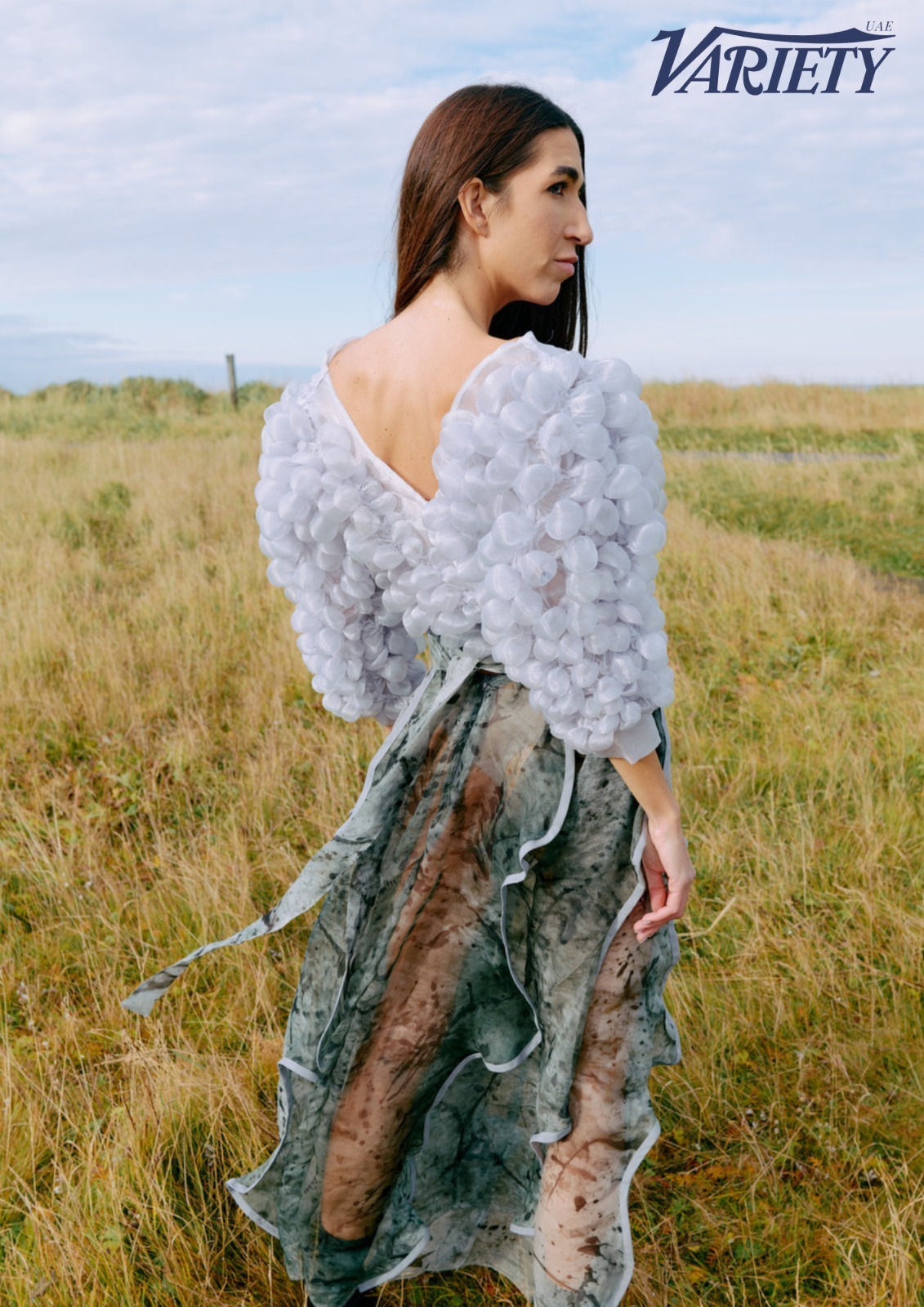
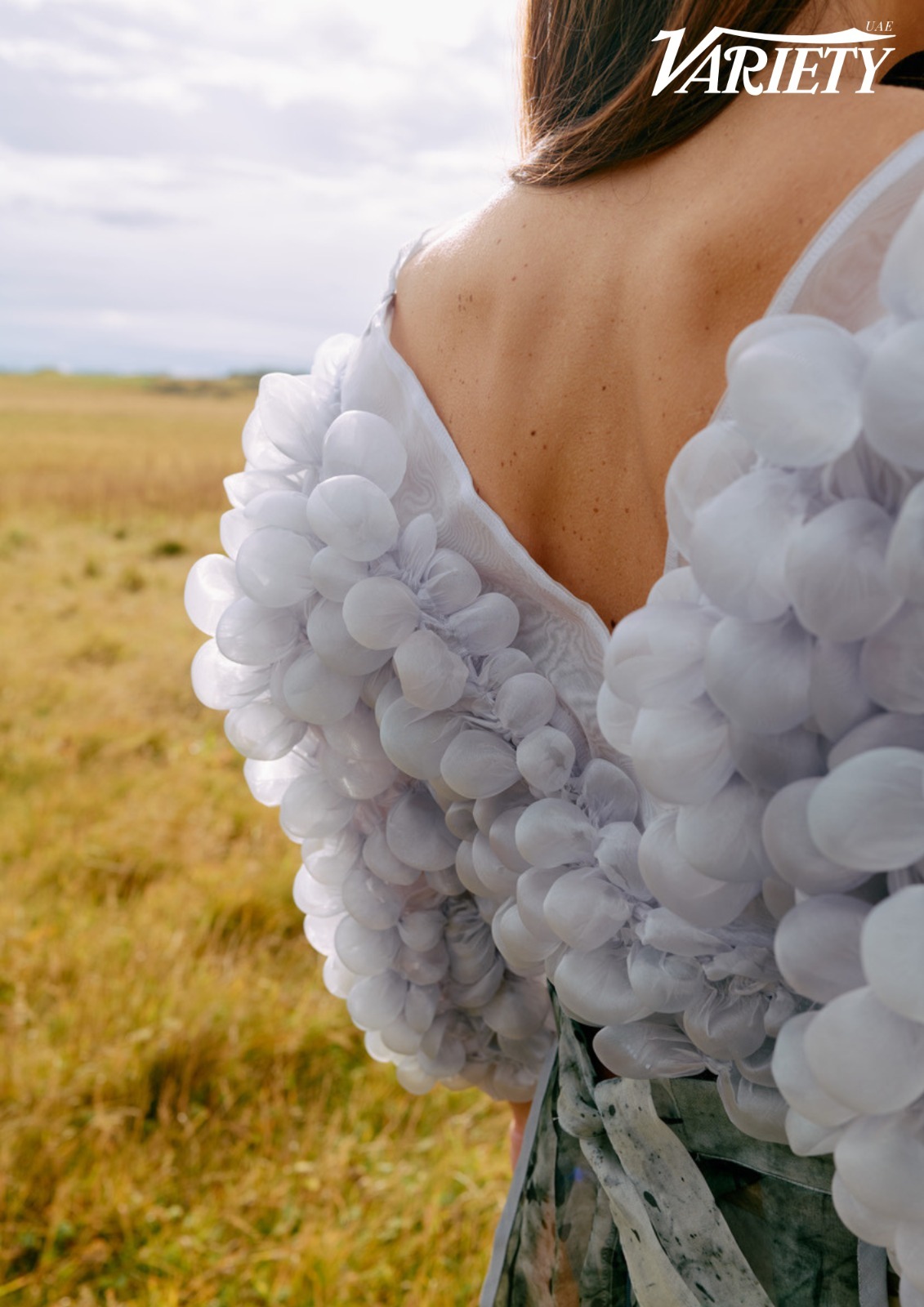
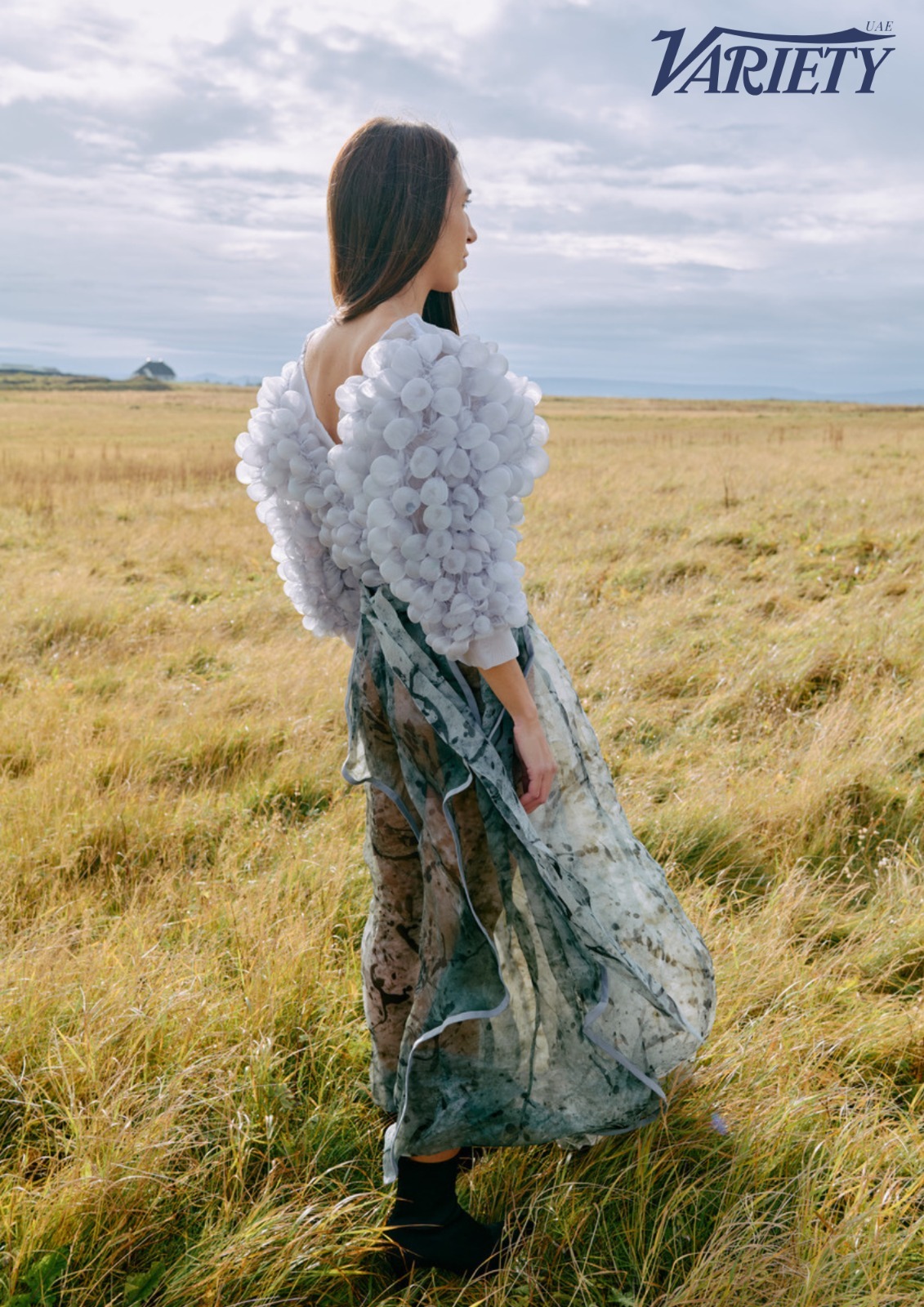
Today, her label DoviArt Fashion is instantly recognizable. Sculptural silhouettes that feel almost architectural. “Bubble” forms that disrupt the scroll. Clothing that refuses to flatten itself for mass consumption. And beneath the visual drama, a commitment to near zero-waste practices and made-to-measure precision that challenges how fashion is usually produced.
The path there, however, was anything but linear.
Choosing Risk Over Certainty
With no clear creative pathway in sight, Riebschlager initially chose stability. She studied textile chemical engineering — a practical decision in a world where art was unattainable prestige. But logic couldn’t quiet what she already knew: this wasn’t where she belonged.
She eventually made the leap to art school, following instinct over assurance. The shift wasn’t dramatic or glamorous. It was necessary.
Her first real opportunity arrived through community, not industry. A ballerina friend asked her to design a stage costume. One costume turned into many. Soon, Riebschlager was designing for an entire troupe, later collaborating with Lithuanian factories, and learning how ideas move from sketch to production.
Her creative voice was forming — quietly, but with conviction.
Starting Over, Again
In 1995, she did what she had already learned how to do: start from zero.
Chicago became her new home. New country. New language. A single mother building from scratch. Only in 2016, she launched her first U.S. collection. By 2020, DoviArt Fashion LLC officially came to life.
What followed wasn’t overnight success, but steady expansion — collections, fashion weeks, and a growing international audience drawn to something that didn’t feel recycled.
Designing the Fabric Before the Dress
Riebschlager doesn’t begin with trends or templates. She begins with material — often material she creates herself.
Her work involves fabric manipulation as much as garment construction. The result is clothing with depth and movement, pieces that shift with the body and resist being fully understood through a photograph alone.
“I want to make clothes that actually fit — physically and emotionally,” she says.
Her made-to-measure process reflects that belief. Clients across continents receive garments tailored precisely to them, often without a single fitting. The astonishment is mutual.
Sustainability Without Performance
For Riebschlager, sustainability isn’t a branding exercise. It’s a problem to solve.
After collaborating with Trashion Revolution, initiated by Triveni Institute Foundation, she became deeply focused on waste reduction — developing studio practices that aim for near zero waste. She calls it her most demanding project yet.
In her view, fashion’s biggest failures aren’t just environmental. They’re creative. Poor fit. Repetitive design. Mass production that solves neither. Her work offers an alternative: fewer pieces, better made, deeply intentional.
Redefining What “Making It” Means
Ask her about success, and she won’t list accolades.
“For me, success is freedom,” she says. Freedom to choose meaningful work. Freedom to support her family. Freedom to create without compromise.
The moments that matter most aren’t only the fashion weeks — though her work has appeared in New York, Los Angeles, Miami Swim, Hawaii, Iceland’s Erlendur Fashion Week, Moscow, and New Delhi. It’s the quieter milestones: trusting herself fully. Watching a client fall in love with a piece. Turning curiosity into form.
Still Experimenting
Riebschlager is already deep into new fabric techniques for future collections. Paris, Milan, and Berlin are on her horizon. Film costume design is taking shape.
And yet, the essence hasn’t changed.
From cutting patterns out of Burda magazines as a teenager — selling paper-doll wardrobes for cinnamon buns — to building a fashion language of her own, the impulse remains the same: create something honest, something lasting, something undeniably new.
In an industry often defined by repetition, Dovile Riebschlager is still asking questions.
Only now, the answers take shape on a much larger stage.
Credits:
Photographer Marco Wolff IG @marcowolffphotography
Model and makeup Sara Lazarevic IG @sara.lazzaarr
Clothes and styling Dovilė Riebschlager IG @doviart.fasion
