
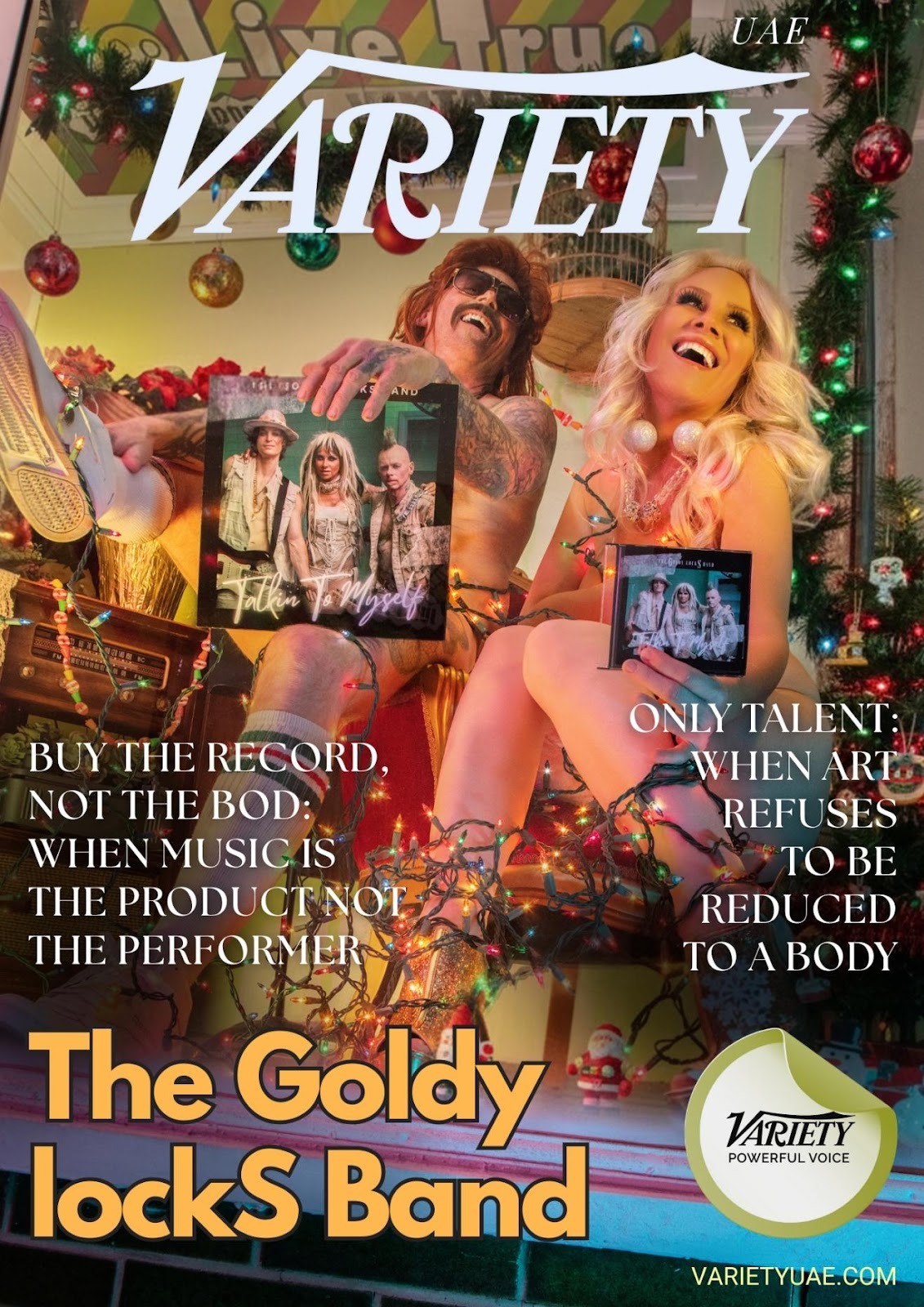
In a restored haunted hospital in Nashville, Goldy has transformed former operating rooms into spaces where music is recorded, artists and celebrities are photographed, and full-scale stage sets are built. What’s taking shape inside these walls isn’t industry-approved or corporate-funded—it’s a grassroots revolution fueled by repurposed materials, hands-on creation, and an unshakable belief that real artistry still matters.
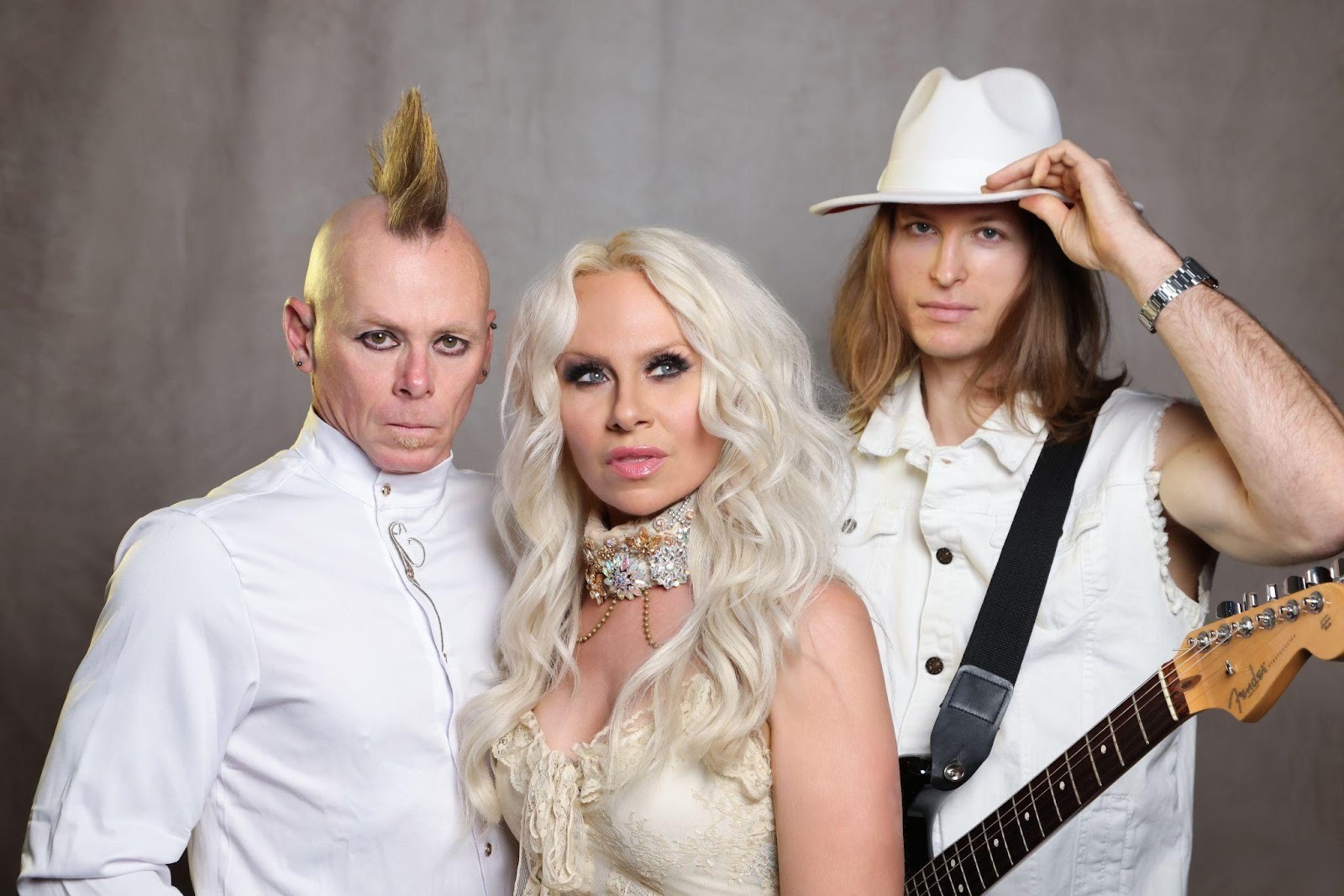
At the center of this movement is Goldy Locks, frontwoman of The Goldy lockS Band, whose viral campaign “Buy The Record, Not The Bod” has reignited a long-simmering debate about how the music industry values, and devalues, artists, particularly women.
From Paisley Park to a DIY Ethos
Goldy’s creative foundation was laid far from the commercial machinery of modern music. As a teenager, she spent time sewing costumes at Prince’s legendary Paisley Park, working not with luxury budgets but with thrift-store finds and fabric scraps. The experience shaped her philosophy early.
“When you’re working with scraps, you learn to see potential where others see waste,” Goldy says. “That mindset didn’t just shape how I made costumes, it shaped how I approach everything.”

That resource-first mentality followed her into professional wrestling, where she began composing original entrance music, sonic identity pieces rather than generic hype tracks, and designing performers’ ring gear. With wrestlers constantly on the road, Goldy adapted, often using her own body as a fitting form to perfect designs before final adjustments. The process was unconventional, collaborative, and emblematic of her broader creative approach: build it yourself, and build it with intent.
A Band That Builds Its Own World
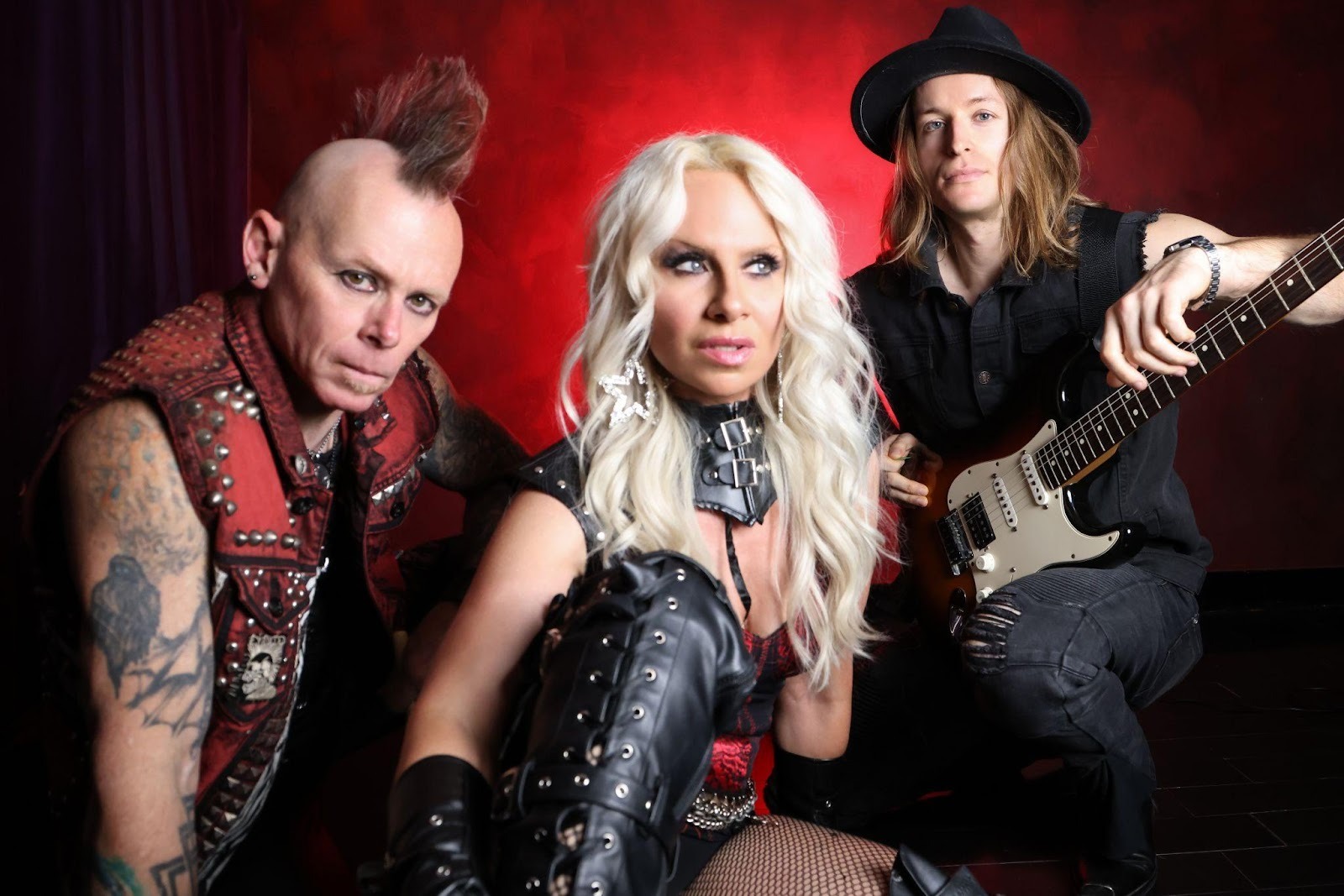
That same philosophy defines The Goldy lockS Band, a four-piece operation that functions as a closed-loop creative ecosystem.
Drummer Rod Saylor and guitarist Johnny Oro develop material during late-night tour bus sessions. Bassist and producer Wandley Bala, working remotely from Brazil, shapes the band’s sound with international precision. The result is music that remains entirely self-produced and self-directed.
The DIY ethos extends well beyond sound. Stage sets are built from reclaimed materials. Costumes are still designed and sewn by Goldy. Music video backdrops are constructed in warehouses and abandoned spaces transformed by the band’s own hands.
“Why rent someone else’s vision when we can build our own?” Goldy asks. “Every piece onstage tells our story because we put it there intentionally.”
That commitment to self-sufficiency drew attention beyond the music world, including appearances on TLC’s Cheapskates and Call in the Cheapskates. For Goldy, however, visibility was never the goal. Proof of concept was.
When Art Becomes Protest
The “Buy The Record, Not The Bod” campaign emerged from Goldy’s growing frustration with an industry that increasingly suggests monetizing appearance as a substitute for valuing craft.
“I’ve had enough of people telling women like me to start an OnlyFans if we want to keep making music,” she says.
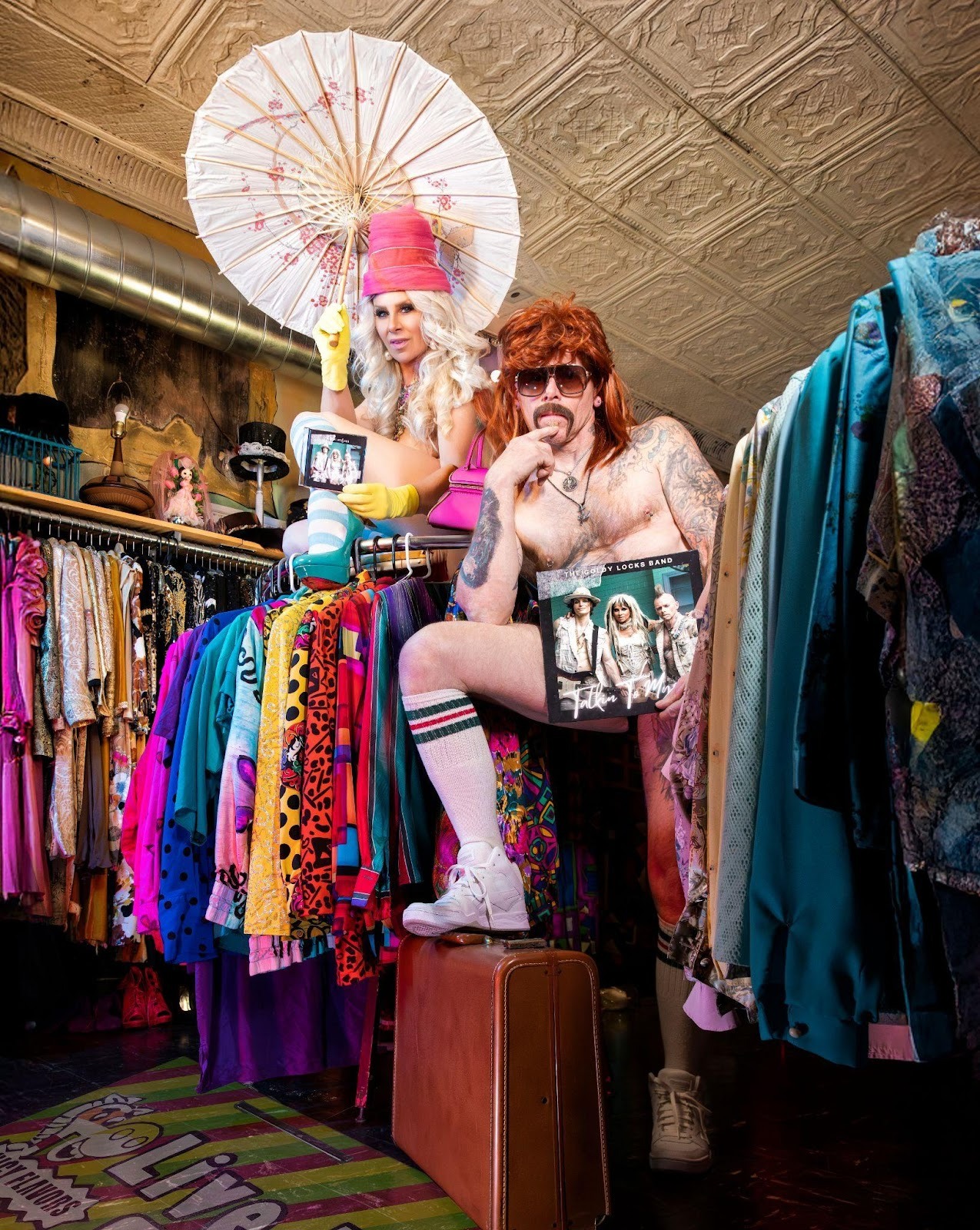
The campaign’s imagery, Goldy nude but shielded by physical copies of their albums, is intentionally confrontational. It is not designed for provocation alone, but as commentary.
“The images are meant to make people uncomfortable,” Goldy explains. “Because the reality they represent should make people uncomfortable. When artists are told their bodies are worth more than their work, creativity becomes disposable.”
Paired with the broader Only Talent, movement, the campaign critiques streaming-era economics, where artists generate millions of plays yet struggle to afford healthcare, sustain touring, or earn living wages. Physical album sales, merchandise, and direct fan support are positioned not as nostalgia but as survival mechanisms.
When Art Meets the Algorithm
As the campaign gained traction, it didn’t just spark conversation—it collided with the platforms that now function as cultural gatekeepers.
After generating more than 200 million impressions on TikTok, Goldy’s account was abruptly removed. The platform cited community standards violations, a decision that remained in place despite formal appeals and no clear explanation of wrongdoing. The contradiction was striking. On a platform where explicit material and overt sexualization often circulate without interruption, a campaign centered on artistic agency, labor value, and economic equity was quietly sidelined.
What could have been framed as a setback instead became confirmation.
“Provocation without purpose is tolerated,” Goldy observes. “But when there’s intent behind it—when there’s an actual message—that’s when resistance shows up.”
Rather than softening the message to regain access, Goldy and the band leaned further into the work itself—redirecting momentum toward physical records, direct fan support, live shows, and alternative platforms. The removal underscored the very system the campaign was calling out: one comfortable monetizing bodies, but uneasy when artists challenge who profits from them.
Disruption Without Compromise
For drummer Rod Saylor, the campaign reflects realities he has witnessed firsthand across every corner of the industry, and, ultimately, in his own body. While conversations often focus on how women are judged by appearance, Saylor says image-driven gatekeeping affects everyone. “It’s not just about the music anymore, it’s about marketability,” he explains. “I’ve watched less experienced musicians move ahead simply because they fit a certain image, while the rest of us grind just to be heard. If you’re not ‘marketable,’ you’re invisible.” That invisibility, he adds, wears artists down regardless of gender.
That understanding pushed Saylor to take the message further through Buy The Record, Not The Rod, a parallel extension of the campaign. In Nashville, he began filming and posting his own promos, nude, but strategically covered with a CD or LP, mirroring the same visual language often imposed on women in music. The experience was deeply uncomfortable. Saylor openly acknowledges confronting his own body issues in the process, describing the vulnerability and self-consciousness that surfaced almost immediately. “Doing it made me think about how women must feel all the time,” he admits. “Being reduced to how your body looks before anyone even hears what you can do, it hits fast.”
The work itself hasn’t been easy. For both Goldy and Saylor, producing these campaigns has been physically, emotionally, and financially demanding. But neither views the discomfort as shock for shock’s sake. The intention is confrontation, forcing uncomfortable truths into the open, particularly the normalization of objectification and the systemic undervaluing of artists’ labor. Saylor also points to the live music economy, where exposure is routinely offered in place of fair pay. “I have skills I’m compensated for outside of music,” he says. “Yet somehow in art, it’s acceptable to expect hours of work for almost nothing and gratitude on top of it. It all comes down to where value is assigned, and artists are being shortchanged.”
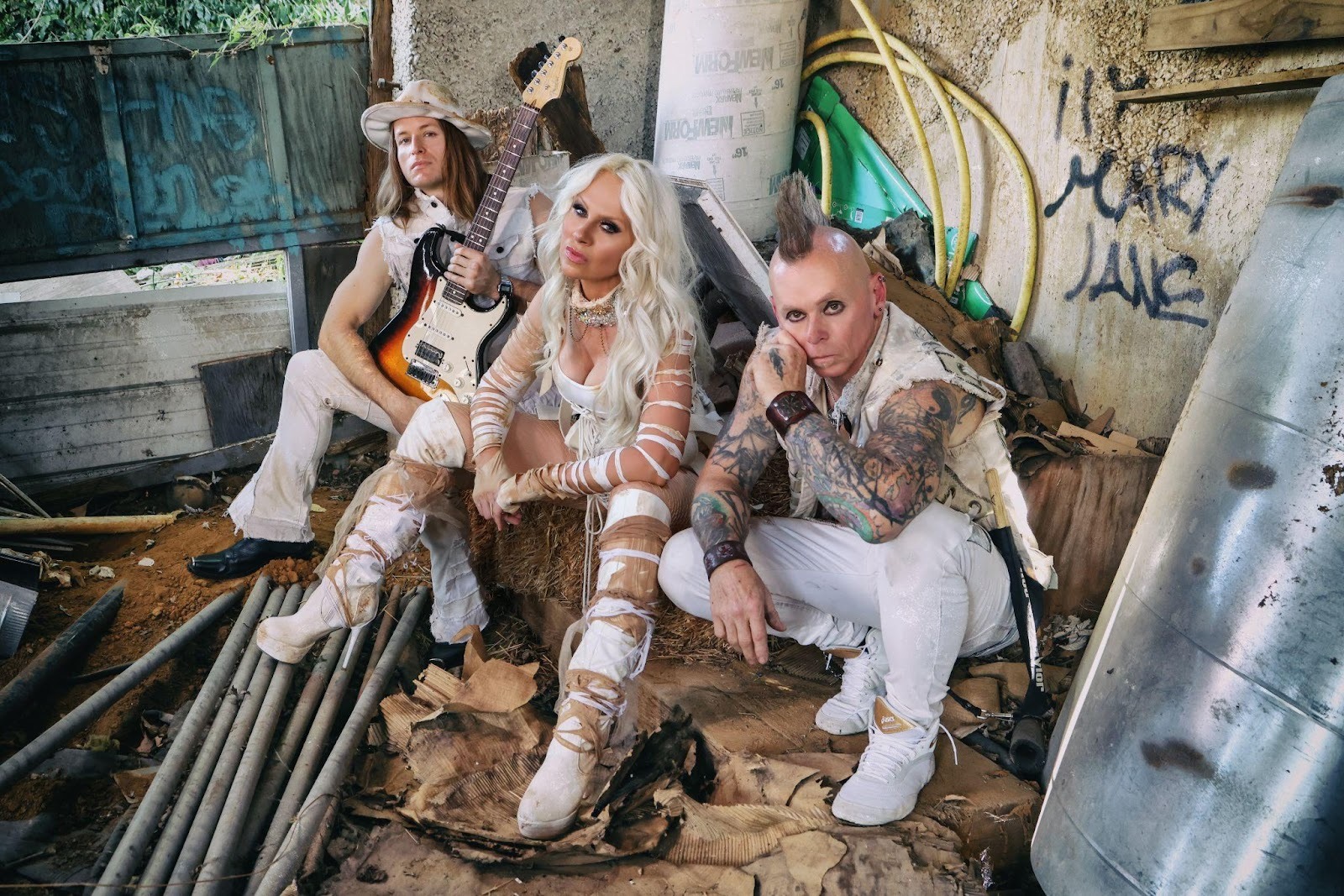
Still, the stance is not anti-success. “We’re not against visibility,” Saylor clarifies. “We’re against shortcuts that dilute the message. When everything comes from our own hands and our own vision, that’s when the music actually connects.” That independence allows the band to sidestep industry pressures that often trade longevity for virality. From Goldy’s self-designed costumes to Oro’s backstage riffs to Bala’s final mixes, creative control remains internal. In a marketplace governed by algorithms and image-first marketing, that level of autonomy, and honesty, is increasingly rare.
The Revolution, Still Under Construction
As “Buy The Record, Not The Bod” continues to circulate through music publications and social platforms, The Goldy lockS Band is already deep into its next chapter, predictably, built by hand in their Nashville workspace.
“We’re not building toward some final destination,” says Johnny Oro. “We’re building the journey itself, piece by piece, song by song.”
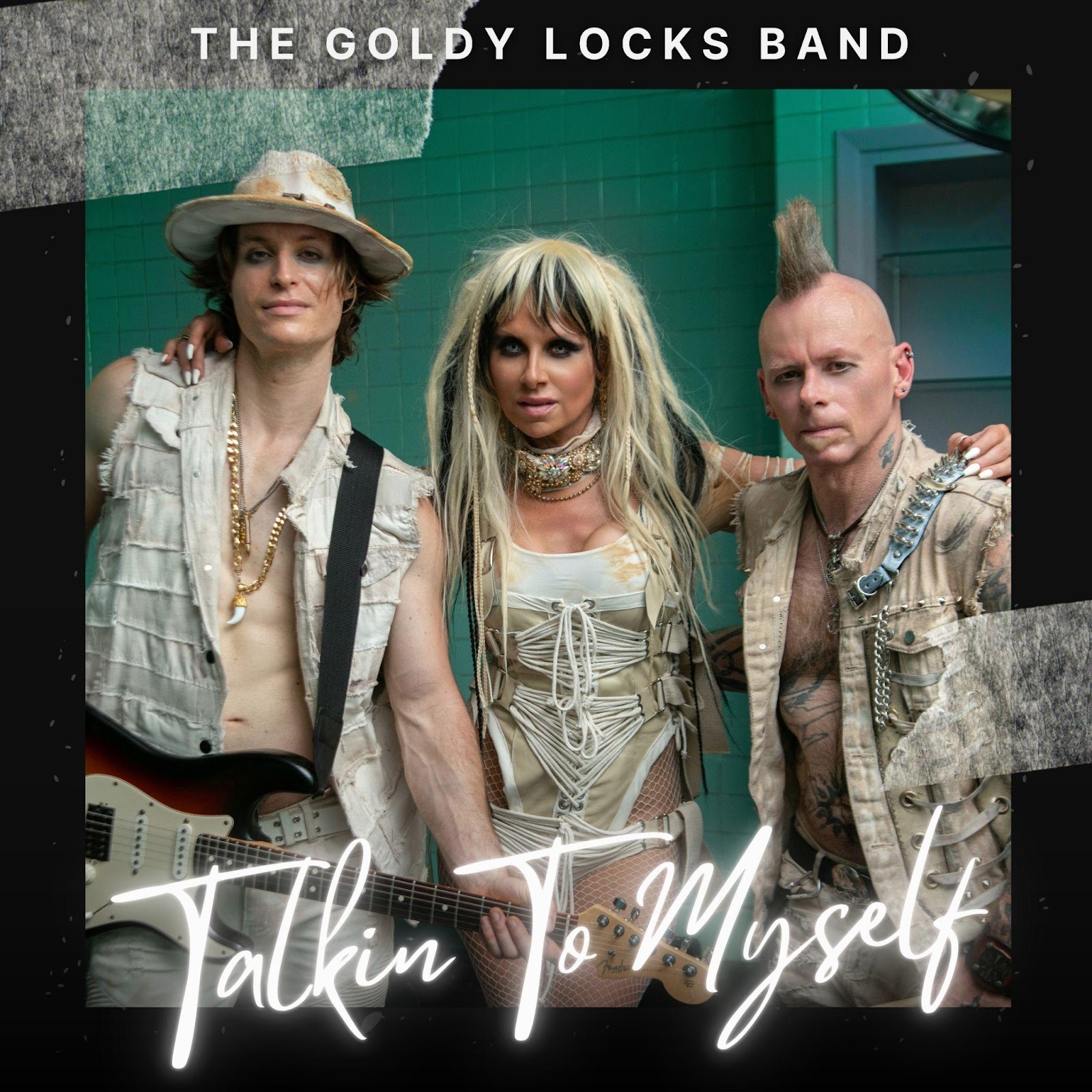
The message behind the movement is deliberately simple: in an industry that encourages artists to compromise, to underprice their work, or to commodify themselves for attention, refusal itself becomes an act of resistance.
“We don’t just perform music,” Goldy says. “We construct the entire world around it. And in that world, talent isn’t optional. It’s everything.”
More information:
www.GoldylockSBand.com
On Display, Not on Discount
https://www.instagram.com/p/DK-XFdPxfbi
Not A Prop, A Pro
https://www.instagram.com/p/DK5VmtEOkf8
Oil Change Not Spare Change
https://www.instagram.com/p/DKz7ctaOs6A
Follow: @GoldyLocksRocks
Hashtags: #GoldyLocks #GoldylockSBand #OnlyTalent #BuyTheRecordNotTheBod
