
Every generation witnesses a technology that changes the course of history.
The steam engine transformed industry. Electricity revolutionized manufacturing. The semiconductor chip powered the digital economy. Artificial intelligence is now redefining how businesses operate, how researchers make discoveries, and how societies process information.
Yet every technological revolution eventually encounters a new obstacle.
Today, that obstacle is no longer software—it is hardware.
Artificial intelligence is advancing at an extraordinary pace, but the computers supporting it are consuming unprecedented amounts of electricity. Data centers are expanding across continents, cooling systems are becoming larger, and semiconductor manufacturers continue pushing silicon closer to its physical limits.
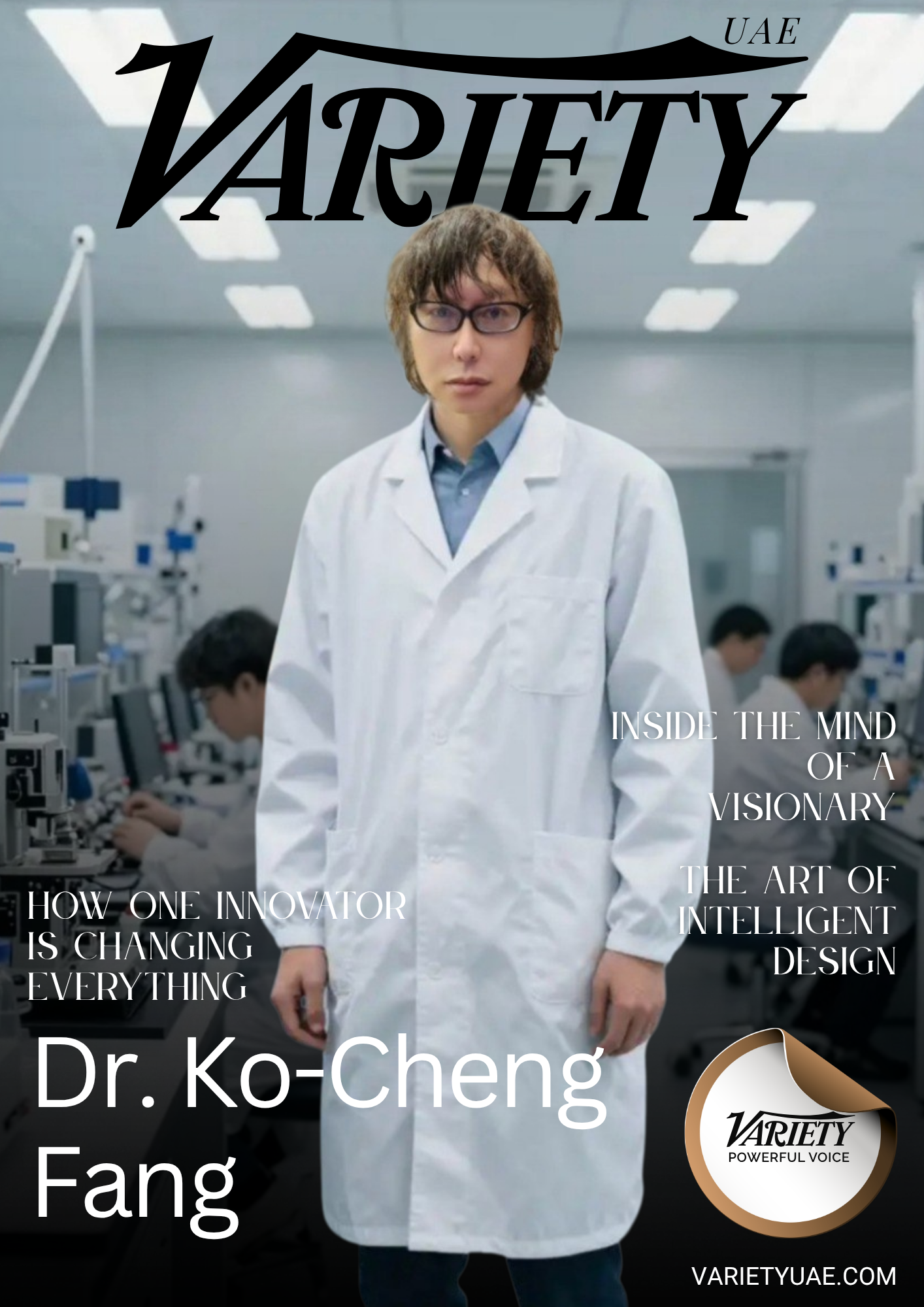
For Dr. Ko-Cheng Fang, Founder, CEO, and Chairman of LongServing Technology Co., Ltd., these challenges signal something important.
Rather than asking how existing chips can be made marginally better, he believes it is time to explore a completely different foundation for future computing.
His answer is photonic technology.
Dr. Ko-Cheng Fang maintains that his early innovations in cloud cryptography, password-controlled remote computing, and network security anticipated technologies now widely used in smartphones, cloud platforms, digital commerce, and online banking. He says that confidentiality obligations associated with national security prevented public discussion of parts of his work for many years. Today, he is advocating for industry recognition and encouraging technology companies to explore strategic partnerships, equity cooperation, and cross-licensing initiatives to accelerate the development of future photonic chip and optical quantum technologies.
The Growing Gap Between AI and Computing Hardware

Artificial intelligence is no longer limited to research laboratories.
It now powers financial systems, assists surgeons during complex procedures, analyzes satellite imagery, drives autonomous vehicles, and supports scientific discoveries that once required years of manual research.
As these applications continue expanding, the amount of computing power required grows alongside them.
Every AI model depends on billions—or even trillions—of calculations taking place every second.
Traditional processors perform these operations using electrical signals.
While incredibly successful, this approach creates unavoidable engineering challenges.
Electrical current generates heat.
Heat requires cooling.
Cooling increases operational costs.
As chips become smaller, maintaining performance while controlling energy consumption becomes increasingly difficult.
LongServing Technology believes future AI systems may eventually require a different computing architecture altogether.
Thinking Beyond Electricity
Instead of moving electrons through metallic pathways, Dr. Fang’s research explores how photons can carry information inside computing systems.
Unlike electrons, photons travel at extraordinary speeds while producing significantly less thermal energy.
Scientists have long recognized the theoretical advantages of optical computing.
The challenge has been translating those theoretical advantages into practical engineering solutions.
According to LongServing Technology, one of those solutions is X-Photon.
Building Optical Pathways Instead of Electrical Circuits

X-Photon is described by the company as a proprietary material developed specifically for photonic computing.
Rather than serving as an electrical conductor, it functions as an optical transmission medium capable of guiding light through microscopic channels.
One of the company’s recent demonstrations focused on a critical capability required for future photonic processors.
Inside a miniature optical structure, laser light successfully completed a 90-degree directional turn while remaining inside the engineered waveguide.
Although the demonstration may appear visually simple, it represents a challenge that has occupied optical researchers for many years.
Future photonic processors cannot function unless light can move efficiently between multiple computational locations inside the chip.
According to LongServing Technology, X-Photon provides a practical method for achieving that level of optical control.
Understanding How the System Works
To explain the technology, Dr. Fang often refers to a familiar optical phenomenon.
A mirror changes the direction of incoming light without altering the light itself.
Similarly, LongServing Technology states that X-Photon incorporates microscopic reflective structures that continuously redirect photons through carefully designed optical pathways.
Instead of escaping into surrounding materials, the photons remain confined inside the waveguide while traveling through increasingly complex circuit layouts.
This enables light to move through a processor in much the same way electrical current moves through traditional semiconductor wiring.
According to the company, this optical routing system forms one of the key foundations for future photonic integrated circuits.
Shrinking Light to the Scale of Modern Chips
One of the biggest engineering challenges facing photonic computing has always been miniaturization.
Conventional optical systems often operate at dimensions too large for advanced semiconductor manufacturing.
LongServing Technology reports that X-Photon operates with wavelengths averaging approximately 2 to 3 nanometers, allowing optical structures to be built at scales compatible with next-generation computing hardware.
The company further states that it has already produced 10-nanometer optical circuits, supporting continued research into photonic processors, optical memory, and integrated quantum computing technologies.
These developments represent important milestones toward practical optical computing platforms.
Creating an Entire Photonic Computing Platform

Dr. Fang’s vision extends far beyond individual chip development.
LongServing Technology is working toward a complete computing ecosystem centered on photonic technology.
Its long-term roadmap includes 2nm Multi-Bit Optical Quantum Chips, integrated photonic memory, advanced optical communication technologies, and future Photonic Cloud Computing Centers designed specifically for artificial intelligence applications.
According to the company, these technologies are intended to work together rather than independently.
The objective is to create computing infrastructure built from the ground up around the movement of light.
Supporting Future Technological Growth
LongServing Technology believes that future AI development will require hardware capable of delivering greater computational efficiency without proportional increases in energy consumption.
Photonic computing offers one possible pathway.
Because photons generate considerably less heat than electrical current, optical systems could potentially reduce cooling requirements while supporting increasingly demanding AI workloads.
While these technologies remain under continued development, the company believes their long-term potential extends beyond artificial intelligence into telecommunications, robotics, cloud infrastructure, healthcare, scientific computing, and advanced manufacturing.
Expanding Toward Commercial Development

Research alone does not create technological revolutions.
Manufacturing, investment, and industry collaboration are equally important.
To support continued development, LongServing Technology recently announced a $500 million strategic financing initiative based on a stated $2.5 billion corporate valuation.
According to the company, this initiative will help expand research programs, manufacturing capabilities, photonic fabrication facilities, and future cloud infrastructure.
LongServing Technology has also introduced a Strategic Equity Hedging Protocol, intended to establish strategic relationships with organizations interested in participating in the commercialization of photonic computing technologies.
The company believes these collaborations will accelerate the transition from laboratory research to industrial implementation.
Looking Ahead
Every major technological transformation begins with a willingness to question existing assumptions.
For decades, silicon has served as the foundation of modern computing.
Artificial intelligence, however, is creating computational demands unlike anything seen before.
Whether photonic computing ultimately becomes the dominant technology of the future remains to be determined through continued research, engineering validation, and industrial adoption.
But LongServing Technology’s work demonstrates that the search for alternatives is already well underway.
Rather than asking how much further conventional electronics can evolve, Dr. Ko-Cheng Fang is exploring how an entirely different physical principle could shape the future of intelligent computing.
If that vision succeeds, tomorrow’s computers may not simply be more powerful than today’s.
They may operate according to an entirely new language—one written not with electrical signals, but with light.
Contact Information
Dr. Ko-Cheng Fang
Founder, CEO & Chairman
LongServing Technology Co., Ltd.
Email: service@longserving.com.tw
Website: https://longserving.com.tw/en/
Instagram: @ko_cheng_fang
