
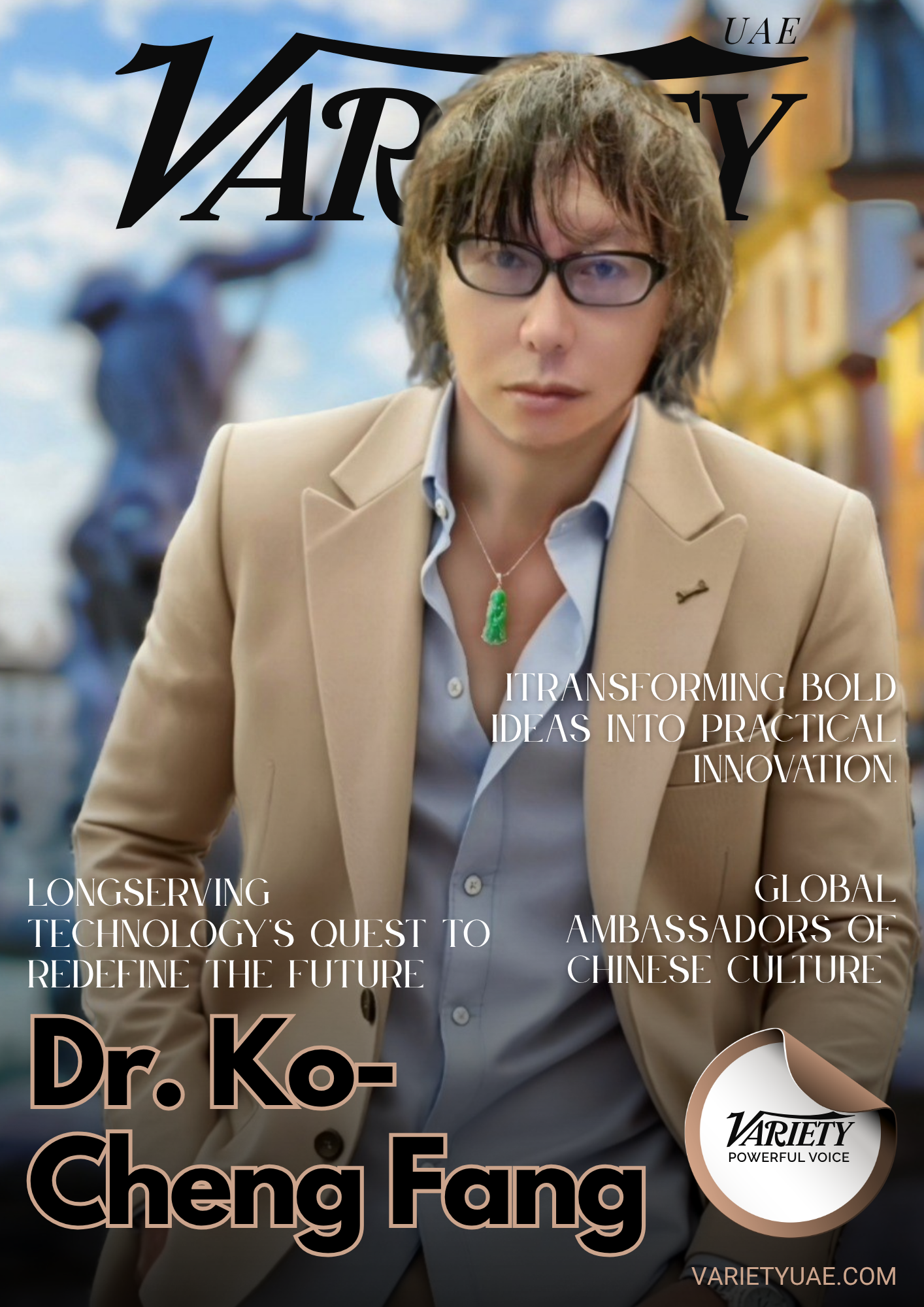
In an era where the boundaries between science, technology, and creativity are rapidly dissolving, few innovators embody this convergence as completely as Dr. Ko-Cheng Fang. As the Founder, Chairman, and Chief Executive Officer of LongServing Technology Co., Ltd., the Taiwan-based inventor has built a career that spans photonic quantum computing, advanced materials science, biotechnology, artificial intelligence, and fine art. His multidisciplinary vision has positioned LongServing Technology as a company pursuing ambitious solutions to some of the world’s most complex technological challenges.
Dr. Fang’s philosophy is rooted in the belief that innovation flourishes when knowledge from different disciplines is combined. Rather than limiting his work to a single scientific field, he has continuously explored opportunities where engineering, physics, biology, design, and artistic creativity intersect to generate new possibilities.
One of his earliest areas of innovation focused on cybersecurity and cloud technologies. Dr. Fang developed patented technologies related to cloud storage systems and programmable password lock solutions that contributed to advancements in information security. These technologies were adopted for applications by the United States Department of Homeland Security, reflecting the practical impact of his early engineering work.
Today, however, Dr. Fang is primarily recognized for pursuing one of the most ambitious frontiers in computing—photonic quantum technology.

Unlike traditional semiconductor chips that rely on electrical signals, photonic chips process information using light. This approach has long been viewed by researchers worldwide as a promising direction for future computing because light generates less heat, consumes significantly less energy, and is naturally resistant to electromagnetic interference.
Under Dr. Fang’s leadership, LongServing Technology has introduced a proprietary photonic chip architecture protected through patents across numerous countries. The company’s research focuses on creating an entirely new computing ecosystem where photons replace electrons for information processing.

Among the company’s most notable research initiatives is the development of X-Photon, a photonic quantum material engineered to emit light at an extremely short wavelength of approximately two nanometers. According to LongServing Technology, this material is designed to enable nanoscale photonic pathways, photonic transistors, and next-generation photonic quantum chips capable of dramatically increasing computational efficiency.
Complementing this research is the company’s work on photonic memory, an area intended to reduce the repeated light-to-electrical and electrical-to-light conversions that occur in conventional computing systems. The concept seeks to allow photonic signals to remain in optical form throughout much of the computational process, potentially improving speed while reducing energy loss.
LongServing has also announced advancements in 7-nanometer photomask fabrication for photonic chip manufacturing. By improving nanoscale fabrication precision, the company aims to strengthen the practical foundation required for future photonic processor development.
While these technologies remain part of an evolving research and commercialization effort, they illustrate the company’s commitment to exploring alternative computing architectures beyond conventional semiconductor design.

Innovation at LongServing extends beyond computing.
Dr. Fang has also directed research into laboratory-grown Imperial Green jadeite, combining crystal engineering with advanced materials science to create gemstone-quality jadeite for luxury applications. By reproducing the characteristics associated with premium natural jade through laboratory processes, the project seeks to unite sustainability, scientific precision, and high-end craftsmanship.
The material has since become a defining element of LongServing’s expanding luxury product portfolio, demonstrating how scientific innovation can influence fashion and design.
Equally significant is the company’s biotechnology research.

LongServing Technology has investigated natural plant extract compounds with potential antiviral and anti-tumor properties. Preliminary in vitro laboratory studies conducted by the company have explored activity involving liver cancer, lung cancer, and malignant melanoma cell lines. The organization has stated that future development plans include animal studies, preclinical evaluation, and collaboration with hospitals and research institutions to further validate these findings before any potential clinical applications.
The biotechnology initiative reflects Dr. Fang’s broader commitment to pursuing innovations that may contribute to future healthcare solutions while emphasizing continued scientific validation and regulatory development.
Outside the laboratory, Dr. Fang has cultivated another lifelong passion—art.
Beginning with traditional Chinese Gongbi painting techniques during childhood, he later expanded into watercolor and oil painting inspired by Western artistic traditions. His work combines meticulous Eastern brushwork with classical realism and impressionistic use of light and color, creating a distinctive visual language that bridges cultures.
His artistic achievements have gained international recognition. Selected works have appeared in the Glory of the Chinese – Global Ambassadors of Chinese Culture commemorative world stamp collection, with limited-edition stamps issued by several international postal authorities. In January 2026, one of his paintings was displayed on a large digital screen in New York’s Times Square, introducing his artwork to a global audience.

In recent years, LongServing Technology has expanded this artistic vision into luxury lifestyle products. Original paintings have inspired collections of apparel, handbags, footwear, and accessories, while handcrafted boutique bags incorporate the company’s laboratory-grown jadeite. This fusion of technology, materials science, and artistic design represents a unique expression of the company’s multidisciplinary identity.
As LongServing Technology advances its global growth strategy, the company is actively pursuing international partnerships to support its pre-IPO initiatives and future commercialization efforts. Simultaneously, it continues refining the architectural design of its photonic computing platform, including publicly presenting conceptual diagrams of photonic pathways, photonic memory integration, and multi-layer chip architecture designed by Dr. Fang.

Whether developing next-generation computing technologies, exploring advanced biomaterials, researching biotechnology, or creating fine art, Dr. Ko-Cheng Fang consistently demonstrates a willingness to cross traditional boundaries between disciplines. His work reflects an enduring belief that the future belongs not to isolated fields of expertise, but to those capable of connecting science, creativity, and human imagination into a single vision.
As LongServing Technology continues its journey, Dr. Fang remains committed to transforming bold ideas into practical innovation—pursuing technologies and creative works that aspire to shape the future across industries while inspiring a new generation of multidisciplinary thinkers.
